
TDSR and MSR: How Your Loan Is Really Decided
When you apply for a home loan in Singapore, the size of the loan is not really set by the property, or even by your salary alone. It is set by two rules that decide how much of your income you are allowed to spend on debt. Understanding them tells you your real budget before you fall in love with a property. This is how TDSR and MSR actually decide your loan.
What TDSR is
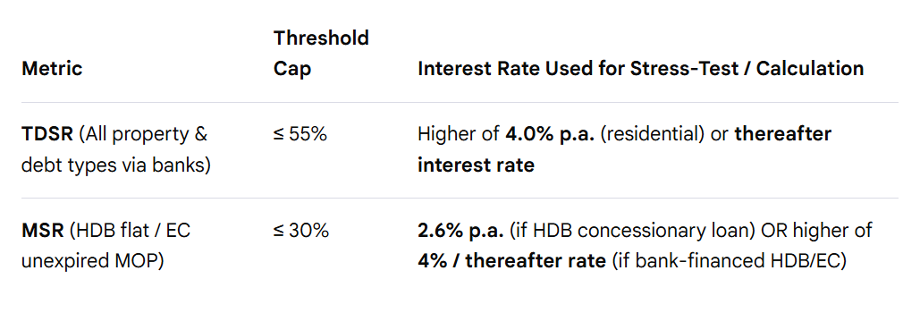
The Total Debt Servicing Ratio limits all your monthly debt repayments combined to 55 percent of your gross monthly income. That includes the new home loan plus car loans, personal loans, credit card balances, and any other borrowing. If your total repayments would breach 55 percent, the loan is cut down until they fit. TDSR applies to all property loans, private and public.
What MSR is, and when it applies
The Mortgage Servicing Ratio is a second, tighter cap that applies only to loans for HDB flats and for executive condominiums bought directly from a developer. It limits the monthly repayment on that housing loan to 30 percent of gross monthly income. For these purchases, both caps apply, and your loan has to satisfy the stricter of the two. MSR does not apply to private residential property, where only TDSR applies.
How the two work together
- Buying a private condo or landed home: only TDSR applies, at 55 percent, across all your debt.
- Buying an HDB flat or an EC from a developer: MSR at 30 percent applies to the housing loan, and TDSR at 55 percent still applies across all your debt. You must clear both.
The practical effect is that HDB and EC buyers are often limited by the 30 percent MSR, while private buyers are limited by the 55 percent TDSR and by their other commitments.
What counts as income, and what counts against you
Lenders do not simply take your basic pay. Variable income such as bonuses, rental income and commissions is usually recognised at a reduced rate of 70 percent. On the other side, existing debts reduce your headroom directly. A car loan or a large personal loan can shrink your housing loan by a surprisingly significant amount, because every dollar of other repayment is a dollar less inside the cap.
A note on loan tenure and the stress rate
Two other factors shape the number. A longer loan tenure lowers the monthly repayment, which can raise how much you qualify for, though tenure is itself capped and a longer tenure means more interest overall. Lenders also assess affordability using a specified medium-term interest rate rather than the current promotional rate, so your loan is sized against a higher assumed rate than you may actually pay at the start. This is deliberate, it protects you from being over-extended if rates rise.
Work out your real budget first
The order most people use is backwards. They find a property, then hope the loan works. The better order is to work out your borrowing limit under these rules first, add your available cash and CPF, and only then shortlist properties inside that number. It saves disappointment, and it makes you a more credible, faster-moving buyer when the right unit appears.
A considered view
TDSR and MSR are not obstacles put in your way, they are guardrails that keep a purchase affordable through good times and bad. Knowing your real limit before you start is one of the simplest ways to buy well. If you would like, I can help you estimate your borrowing headroom and your true budget before you begin looking.
Douglas Chow is a licensed real estate professional in Singapore who advises buyers and sellers with an honest, objective approach. He helps clients weigh the real numbers behind residential and commercial property decisions.
Ask Douglas about your borrowing limit